
Small billing discrepancies in invoices can accumulate into substantial hidden costs, highlighting the need for better invoice validation and financial oversight.
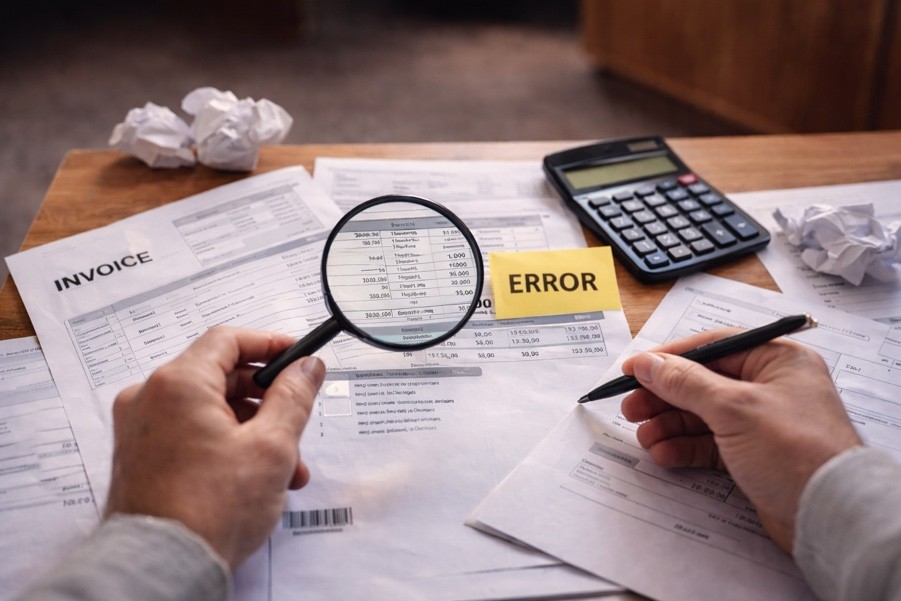
Invoices are usually treated as routine administrative documents, which are processed, approved and paid with minimal research on them. But for many companies, these invoices represent one source of silent financial loss.
Behind the standard billing data that invoices present, there are issues such as pricing discrepancies, duplicate charges, tariff misplaces and small overcharges that accumulate over time. Due to overlooking the invoices, companies unknowingly overpay these invoices, sometimes a high amount of money annually.
Read the story
Although invoices may appear simple, they often contain large amounts of structured and unstructured information. Because suppliers design invoices using different formats and layouts, extracting this information accurately can be difficult. Variations in structure, terminology and table formatting increase the chances of errors when invoices are processed manually.
Research on invoice data extraction highlights how these structural differences make reliable data capture challenging, especially when organizations deal with large volumes of invoices. When companies process hundreds or thousands of invoices each month, even small mistakes in interpreting this data can quickly add up. (Saout, Lardeux, & Saubion, 2024)
Invoice errors are rarely large or obvious. Instead, they often appear as small discrepancies across many transactions.
Common examples include:
Individually, these mistakes may seem insignificant. However, repeated across multiple invoices and billing cycles, they can lead to substantial hidden costs. Inefficient invoice processes and manual data handling can also increase administrative workload and reduce financial transparency. Over time, these issues can make it difficult for organizations to fully understand their operational spending. (Holmlund, 2020)
Many organizations still rely on manual invoice processing or semi-automated workflows. While human oversight remains important, manual data entry introduces the possibility of inaccuracies.
Inaccurate records in operational processes are known to affect financial control and decision-making. Errors in transactional data can lead to incorrect reporting, reduced financial visibility, and unnecessary costs.
When invoice information is manually interpreted or entered into systems, discrepancies can easily be introduced into financial records. These errors can remain unnoticed, especially when invoices are processed at high volumes. (Wynn, 2021)
Another challenge in invoice processing is the lack of standardized formats. Suppliers often use different structures, descriptions and billing formats, making it difficult to consistently verify invoice data.
Electronic invoicing systems aim to improve this by standardizing invoice information and reducing manual processing errors. However, digital invoices alone do not guarantee accuracy. Proper validation is still required to ensure that charges match agreed prices and contractual terms. (Yang, Yang, Song, & Fu, 2023)
Organizations that analyze invoice data more carefully can identify discrepancies earlier, detect recurring billing issues and gain greater transparency into their spending.
Instead of treating invoices simply as documents to be paid, businesses that view them as valuable financial data can better control costs, reduce errors and improve overall financial visibility.